


Contents3 sections
The moment your ratchet strap starts to show signs of damage or when it is not conforming to the EN 12195-2: 2001 UK standard. However, this can be possible in a situation when you trust an unreliable company and purchase equipment without doing any inspection or research.
Through this blog, you will learn about the moment when to replace ratchet straps to guarantee safety during transit loads.
Need For Swapping a Ratchet Strap
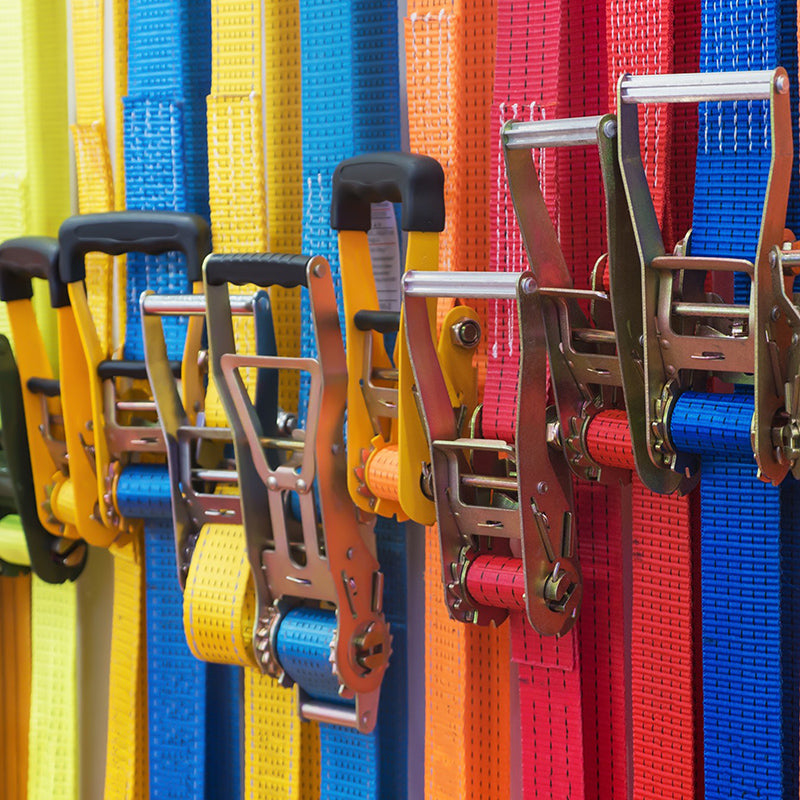
A ratchet strap is a gear that is widely used for securing heavy materials to cargo. Because it is made from 100% polyester material, your item will not be damaged, as it is unlike rigid chains.
Compliance With Ratchet Strap Safety Regulations in the UK
If a strap that you are currently using is non-compliant, then it might bring disadvantages to you. Since it pinpoints that the equipment is not certified and has not undergone tests, which might cause an accident.
On the other hand, a ratchet strap that matches the safety standard of British EN 12195-2 gives you the satisfaction that the equipment you are employing is verified legally.
But still, maintenance cannot be ignored, as avoiding damp areas and having appropriate knowledge of using a ratchet strap will improve efficiency.
Ratchet Strap Inspection: The Webbing Part of the Strap
In the UK, it has been important that your ratchet strap is free from any damage or cuts on the webbing. Because a single gash might become the reason behind the slippage of the load from the truck or trailer.
Fasten Load Under the Mentioned Limit
Any ratchet strap can secure a particular weight of load, but if it is more than the limitation, it increases the chances of the strap breaking.
For instance,
If you have selected Premium 5000kg Ratchet Strap, then the weight of the load must be according to its lashing capacity, which is 2500.
Utilisation of Accurate Hooks
Before bringing your ratchet strap on-site, it is crucial to select the proper hook (e.g., J-hooks or S-Hooks) that will fit with the anchor point. Therefore, to stabilise the load during transportation, the perfect hook develops a link between the webbing and the fixed anchor point of the trailer or truck.
According to ratchet strap safety regulations in the UK, it is significant to properly inspect the anchor point to determine whether it is rusty or good to use.
Strap Must Not Move During Transit
To ensure road safety, DVSA has highlighted that a ratchet strap must remain in its place and properly hold the load so that it won’t move.
Key Role of a Reliable Company in Buying Gear
If you want to safely haul furniture, construction materials, or heavy automobile parts, then reliance on a ratchet strap that comes with all certificates is ideal. Because purchasing from an unknown shop might bring hindrances to your operations.
That is why The Ratchet Shop, which is the best company in the UK offering equipment with manufacturer mark, size, length, and ID mark on it to assure safety and content.
What are the questions that people have for The Ratchet Shop?
How often should a ratchet strap be replaced in the UK?
There is no fixed replacement time, but a ratchet strap should be replaced immediately if it shows signs of damage, wear, or non-compliance with EN 12195-2. Regular visual inspections before each use are recommended, and any strap that fails inspection must be taken out of service.
What damage means a ratchet strap is no longer safe to use?
You should replace a ratchet strap if you notice cuts, fraying, tears, melted fibres, chemical damage, or weakened stitching on the webbing. Even small cuts can significantly reduce strength and increase the risk of load failure during transit.
Is it illegal to use a non-certified ratchet strap in the UK?
Using a non-certified or non-compliant ratchet strap can lead to DVSA enforcement action, fines, or vehicle prohibition if it fails a roadside inspection. UK regulations require load restraint equipment to meet EN 12195-2 standards to ensure road safety.
Can overloading a ratchet strap damage it even if it looks fine?
Yes. Exceeding the strap’s lashing capacity (LC) can cause internal fibre damage that may not be visible. Even if the strap appears intact, it should be replaced if it has been overloaded, as its strength can no longer be guaranteed.
Do hooks and ratchet mechanisms affect when a strap should be replaced?
Absolutely. A ratchet strap must be replaced if the hooks are bent, cracked, excessively worn, or rusty, or if the ratchet mechanism does not lock and release smoothly. Faulty metal components can compromise the entire load restraint system.
Conclusion
For safe and lawful load restraint in the UK, knowing when to replace a ratchet strap is crucial. Road users and your load may be at risk due to any indications of deterioration, non-compliance with EN 12195-2, or improper use.
Therefore, accident prevention is mostly dependent on purchasing approved equipment from a reputable source, conducting routine inspections, and setting appropriate load limits. You can guarantee safer transportation and peace of mind on every trip by promptly replacing worn or non-compliant straps. Lastly, reach out to The Ratchet Shop if you want your business not face any risky consequences.


