


Contents5 sections
The right industrial lifting sling depends on three things: the load you need to move, the environment it will work in, and the certification your site requires. Get any one of these wrong and you either overpay for capacity you do not need or, worse, put a load on equipment that cannot safely carry it. This guide compares the main lifting sling materials, explains how load rating works, walks through common application scenarios, and covers the compliance rules that apply in the UK.
Lifting slings are one of the most heavily used pieces of rigging equipment on any site, which is exactly why the material and grade you choose matters so much. A sling that is undersized, worn, or mismatched to the job is one of the most common causes of dropped load incidents, so getting this decision right at the buying stage pays off every time the sling goes into service.
Material Comparison: Webbing, Round, and Chain Slings
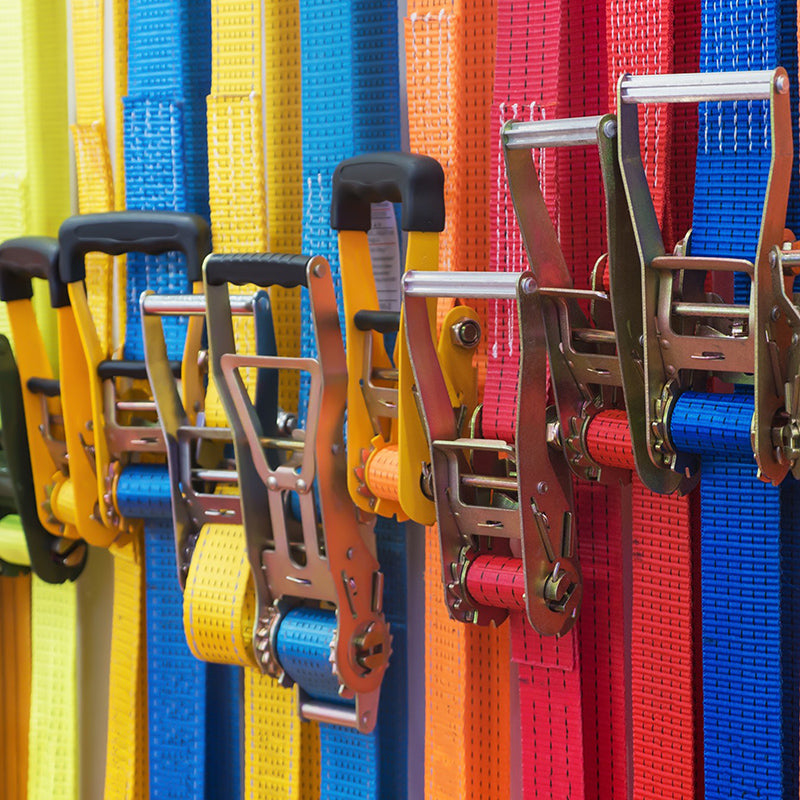
Webbing slings are made from woven polyester or nylon fibre and are the most common choice for general industrial lifting work. They are lightweight, flexible, and gentle on the surface of the load, which makes them suitable for finished goods, machinery with painted surfaces, and general warehouse or site lifting. Polyester webbing resists stretching under load and holds up well outdoors, while nylon offers slightly better abrasion resistance but absorbs more moisture, which can reduce its strength when wet.
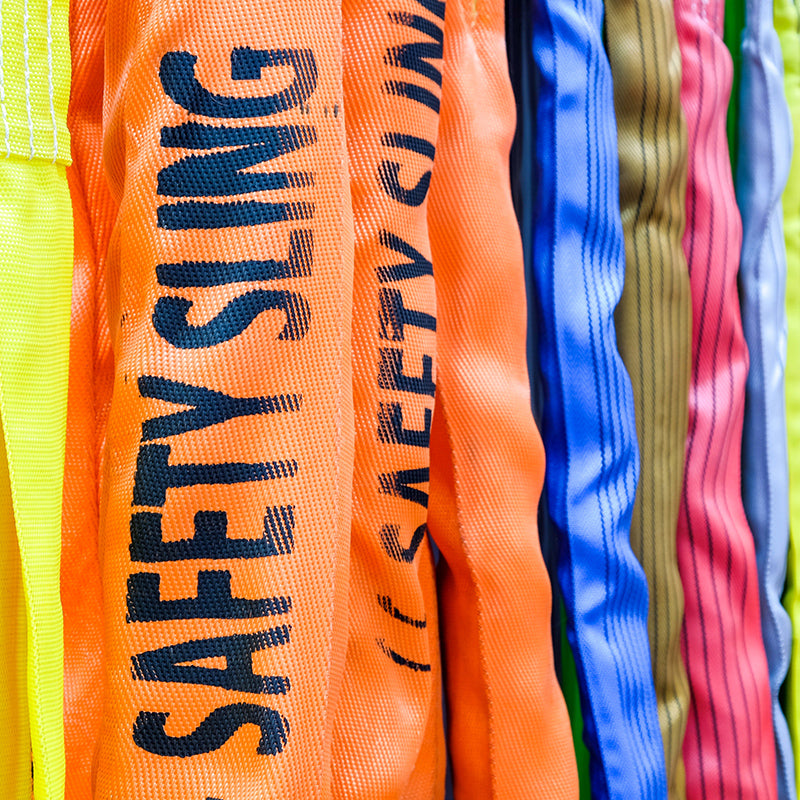
Round slings use the same core fibres, usually polyester, but the yarn is bundled inside a protective woven sleeve rather than woven flat. This construction spreads load evenly around the entire circumference of the sling, which reduces wear at contact points and makes round slings well suited to choker hitches and awkward or irregular loads. Because the load bearing core sits inside a sleeve, a round sling can often carry a higher rating than a webbing sling of a similar width, and the sleeve can usually be replaced separately if it wears through before the core.
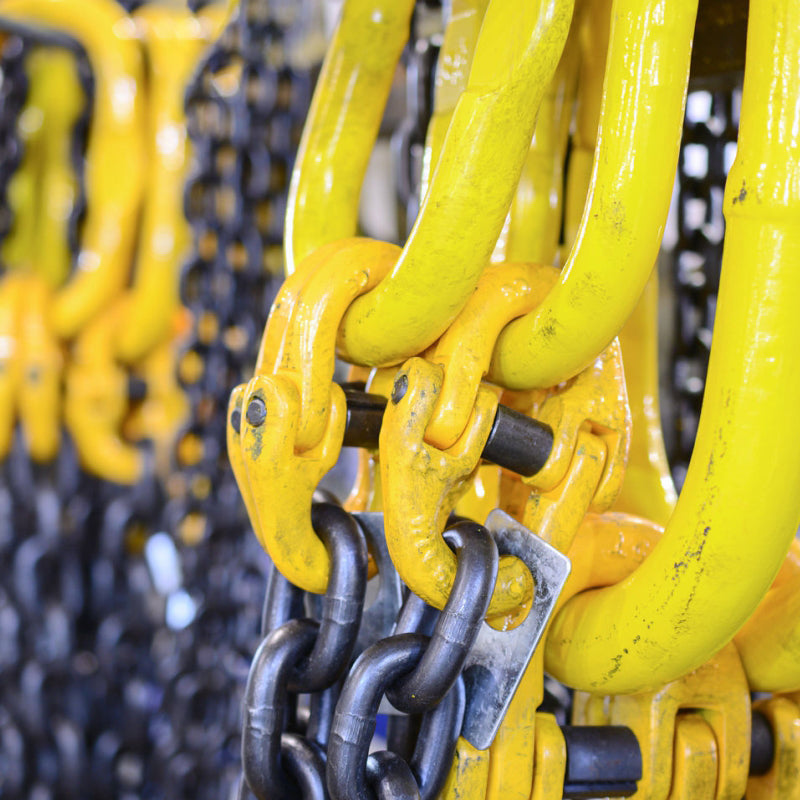
Alloy steel chain slings are the choice when a job involves high heat, sharp edges, or a working environment where fibre based lifting slings would be cut or melted. Chain slings carry the highest load ratings of the three for a given size and are typically used in foundries, steel fabrication, and heavy plant recovery, though they are heavier and less forgiving on delicate surfaces than webbing or round slings.
|
Material |
Best for |
Typical rating for size |
Surface protection |
|
Webbing sling |
General lifting, painted or finished goods |
Moderate |
Excellent |
|
Round sling |
Choker hitches, awkward or rounded loads |
Moderate to high |
Good |
|
Chain sling |
Heat, sharp edges, heavy plant work |
Highest |
Poor |
Load Rating: What WLL Actually Means
Every certified lifting sling carries a working load limit (WLL), the maximum load it is rated to lift under a straight, vertical pull. This figure already includes a safety factor built in during testing and certification, so the WLL is the number you work to, not the sling's breaking strength.
A few points affect the WLL you actually get on a job:
- Hitch type changes the rating. A straight lift, choker hitch, and basket hitch each carry a different percentage of the sling's rated capacity, with basket hitches generally allowing the highest load.
- Sling angle reduces capacity as the angle from vertical increases. A lifting sling used at a wide angle carries significantly less load than the same sling used in a straight vertical lift.
- Grade and material set the baseline WLL for a given width or diameter, which is why a chain sling and a webbing sling of similar size carry different ratings.
- Number of legs in a multi leg lifting sling arrangement changes the total rated capacity, and this figure is not simply the WLL multiplied by the number of legs.
- Temperature can reduce the rated capacity of fibre based slings, since polyester and nylon both lose strength above certain working temperatures, while chain slings tolerate much higher heat before their rating is affected.
Always check the label attached to the lifting sling for its WLL, material, and safe working angle before use, and never estimate this figure by eye.
Application Scenarios: Matching the Sling to the Job
General warehouse and site lifting typically calls for polyester webbing slings, since they are light to handle, gentle on surfaces, and cost effective for routine loads.
Lifting delicate, painted, or polished components favours round slings or wide flat webbing, since the broader contact surface reduces the risk of marking or denting the load.
Choker hitch lifts on awkward or rounded loads, such as pipes or cable drums, are better suited to round slings, since the sleeve construction distributes load evenly as the sling cinches around the item.
Foundries, hot work, and sharp-edged loads call for alloy steel chain slings, since fibre based lifting slings can melt, char, or be cut through in these conditions.
Marine, offshore, and washdown environments often call for slings finished or protected against moisture and salt exposure, paired with corrosion resistant hardware at the connection points.
Multi leg lifting arrangements, such as lifting a frame or skid from four points, need slings matched in length and rating, along with a correctly rated master link to bring the legs together safely.
Compliance: What UK Regulations Require
In the UK, lifting slings used at work fall under the Lifting Operations and Lifting Equipment Regulations 1998 (LOLER) and the Provision and Use of Work Equipment Regulations 1998 (PUWER). Under LOLER, lifting equipment used to lift a load must be thoroughly examined at least every six months, or in line with an examination scheme set by a competent person.
Slings should also be manufactured and tested to the relevant British or European standard for their type, such as BS EN 1492 for textile webbing slings and BS EN 1492-2 for round slings. A compliant lifting sling carries a permanent label showing its WLL, material, manufacturer, and identification number, and this label must remain legible for the sling to stay in service. If the label is missing or unreadable, the sling should be treated as unidentified and withdrawn from use until it can be verified.
Before every lift, a visual pre use check should confirm there is no cutting, fraying, chemical damage, or heat damage to the sling, and any damaged sling should be removed from service immediately rather than repaired informally. Keeping test certificates on file for every lifting sling in your inventory also makes site audits and insurance checks considerably faster.
Our certified webbing and round slings and lifting and towing chains are supplied with full test certification, so your site paperwork is covered from the moment the sling arrives. If you also need fall protection equipment for the same job, our range covers that too, all from one supplier.
Frequently Asked Questions
What is the difference between a webbing sling and a round sling?
A webbing sling is woven flat, while a round sling has its load bearing fibres bundled inside a protective sleeve, which spreads load more evenly.
Can lifting slings be repaired if damaged?
No, a damaged sling should be removed from service immediately and replaced, since informal repairs can compromise its certified load rating.
How often do lifting slings need inspection under LOLER?
Lifting equipment must be thoroughly examined at least every six months, alongside a visual check before each use.
Do round slings carry a higher load rating than webbing slings?
Often yes, for a similar size, since the sleeve construction protects the core fibres and distributes load more evenly.
What information should a compliant sling label show?
The label should show the working load limit, material, manufacturer, and an identification number for traceability.
Conclusion
Choosing between webbing, round, and chain lifting slings comes down to matching the material and grade to the load, the environment, and the certification your site demands. Webbing slings suit general lifting, round slings suit choker hitches and delicate loads, and chain slings suit heat and heavy-duty work. Whichever material you choose, check the WLL, confirm the certification, and inspect the sling before every lift. Getting this right keeps your lifting operation both compliant and safe.


