


Contents6 sections
Selecting the strongest lifting chains isn’t always the answer to your problems. It all comes down to long-term value, safety, and dependability.
For that reason, grade 100 chains aren't always the greatest solution, even though their greater strength ratings make them appear like the obvious choice. Actually, in the majority of lifting activities, Grade 80 lifting chains from The Ratchet Shop provide greater stability, versatility, and affordability. Because of this, a lot of industries continue to favour Grade 80 over the more rigorous Grade 100.
Let's examine the functions of both chains, their practical applications, and the reasons why, in the comparison of grade 80 vs grade 100 lifting chains, Grade 80 might be a better option for your lifting requirements.
Comparing Grade 80 vs Grade 100 Lifting Chain: What's the Difference?
Despite their apparent similarities, Grade 80 and Grade 100 lifting chains differ greatly in terms of their characteristics and capabilities. The strength-to-weight ratio is higher in grade 100 chains. This pinpoints that these lifting chains can carry more weight. But this benefit has a price, both in terms of money and time.
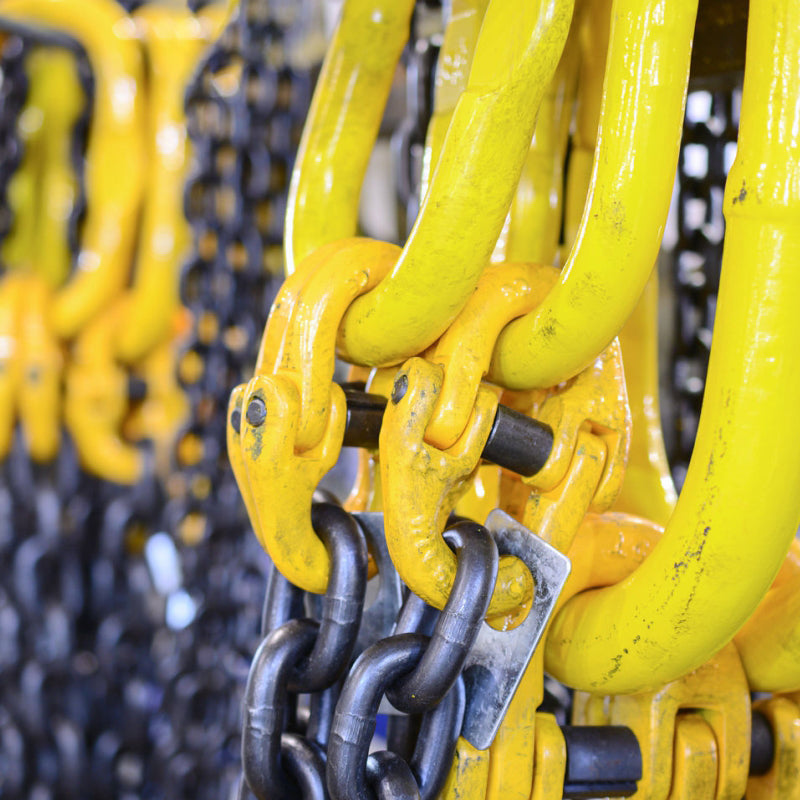
However, premium alloy steel is used to make grade 80 chains, particularly those offered by The Ratchet Shop. Heat treatment is used on these chains to increase their durability. They are completely tested and approved, and these lifting chains follow safety regulations in the UK and elsewhere. They are quite effective for controlled lifts because of their shorter links, which help to eliminate slippage of cargo during lifting.
On the other hand, grade 100 chains are less tolerant under specific lifting circumstances. They might be challenging to control in tilted or uneven lifts due to their rigidity. In the context of the lifting chain grade difference, UK buyers often consider that these chains also tend to be more expensive to manufacture and maintain.
|
Feature |
Grade 80 Lifting Chains |
Grade 100 Lifting Chains |
|
Strength |
Strong and reliable for most lifting needs |
Higher strength-to-weight ratio |
|
Flexibility |
More flexible and easier to handle |
Rigid, harder to adjust in angled or uneven lifts |
|
Cost |
Cost-effective and widely available |
More expensive to buy and replace |
|
Safety |
Forgiving under tough conditions and easier to inspect |
More resistant, riskier if misused |
|
Best For |
Construction, shipping, general lifting |
Controlled environments only |
Real-World Applications: Where Grade 80 Outperforms Grade 100
In your daily routine, it is not necessary that you lift things under the best conditions. Angles may vary mid-lift, loads may be off-centre, and weather conditions may impact the apparatus. That’s why understanding the difference between a grade 80 vs a grade 100 lifting chain becomes important. For these unpredictable situations, grade 80 chains are more appropriate.
When under pressure, they slightly bend, which lessens the shock. Additionally, they provide greater versatility in their application. Workers in heavy machinery, shipping, and construction prefer them. The Ratchet Shop's multi-leg designs are perfect for lifting heavy, uneven loads when angles are crucial.
However, Grade 100 chains might work fine in ideal circumstances, but have trouble with unequal stress. Under side-loading, their inflexible construction increases the chances of abrupt breaking. As a result, they are better suited for controlled settings, where everything is properly planned beforehand.
Safety and Certification
Strength isn't the only factor in safe lifting. It's about knowing how a chain will act when it's stressed. As explained in our blog Why Grade 80 Lifting Chains Are a Game Changer in Heavy Lifting, The Ratchet Shop's Grade 80 chains meet international lifting standards and come with permanent ID tags that include key details like chain size, grade, WLL, and serial numbers.
Every lifting chain and lifting sling can be tracked. In the event of an accident, you can easily review its history. This gives you peace of mind and less downtime.
But grade 100 chains don't always provide the same latitude when it comes to certification and inspection. Because of their greater working limits, people mostly overlook angle reductions or incorrect loading, which can be hazardous. Hence, workplace dangers may rise as a result of this.
Cost and Practicality
Price is the most important factor that cannot be neglected in any case. Manufacturing grade 100 chains is more costly. More specific alloys and testing are needed for them. The customer is charged the price. You're paying for the chain's reputation in addition to its actual cost. However, understanding the lifting chain grade difference in the UK plays a vital role in pricing, especially when comparing Grade 80 and Grade 100 options.
On the other hand, Grade 80 chains are more affordable and provide outstanding performance. They are simpler to maintain and replace, and they last longer when used in everyday situations. Not only that, but The Ratchet Shop allows you to get the length or configuration you require without going over budget.
In industries where chains are damaged over time from common use, it is significantly less expensive to replace a Grade 80 chain than to find a new Grade 100. For long-term projects and companies that manage several pieces of lifting equipment, Grade 80 is the best choice.
What is the Final Statement?
It is pretty clear through the above-mentioned information that reliance on grade 80 chains is a good option rather than fitting grade 100 chains in every situation.
On The Ratchet Shop website, they mentioned a blog that gives you a proper understanding of what to choose in the comparison of grade 80 vs grade 100 lifting chain.
What are the questions that people normally want to ask The Ratchet Shop?
What is the main difference between Grade 80 and Grade 100 lifting chains?
Grade 100 chains are stronger than Grade 80 chains and can handle more weight for their size. However, when comparing a grade 80 vs a grade 100 lifting chain, it's important to consider more than just strength.
Grade 80 chains are more flexible, easier to use, and better suited for most everyday lifting tasks. They are also more affordable and widely used across many industries.
Is Grade 100 always better than Grade 80 for lifting?
Not always. Grade 100 offers higher strength, but it's not always needed. Grade 80 chains are often more practical, especially in rough conditions where flexibility and ease of use matter. Most jobs don’t require the extra strength of Grade 100, making Grade 80 a smarter choice for general lifting.
Are Grade 80 lifting chains safe to use for heavy lifting?
Yes, Grade 80 chains are safe when used within their rated capacity. They are proof-tested, certified, and meet industry standards. Many professionals prefer them because they handle real-world lifting conditions better than the stiffer Grade 100 chains.
Why are Grade 100 lifting chains more expensive than Grade 80?
Grade 100 chains are made with higher-grade alloy steel and go through more advanced processing, which raises their cost. However, unless you need the extra lifting capacity, the added expense often isn't necessary for most lifting jobs.
Which lifting chain should I use for construction or warehouse work?
Grade 80 chains are usually the better choice for construction, warehouse, and general industrial use. They’re durable, flexible, and easier to handle on uneven surfaces or when lifting at different angles. Grade 100 is best reserved for highly specific or heavy-duty lifts where every kilogram counts.
Conclusion
The quality of the chain you use determines how reliable your lifting equipment is. When comparing a grade 80 vs a grade 100 lifting chain, it’s important to consider what your job truly requires. Even though Grade 100 can sound impressive, most occupations don't require the complexities that come with it. Grade 80 chains from The Ratchet Shop give you affordable cost, safety, and practical performance, so it doesn’t matter if you're lifting with one leg or several.
Thus, contact The Ratchet if you want their help in buying grade 80 lifting chains or just simply want to know about it.


