



Contents7 sections
Ratchet straps are considered quite important for securing cargo during transportation. These straps are strong enough to hold things in place whether you're transferring cars, securing equipment, or moving household items. But if you use ratchet straps without any instruction then it might result in accidents, damaged cargo, or even personal injury.
So, this blog will highlight common mistakes with ratchet straps and how to avoid them for safe cargo transportation.
How Can You Prevent Common Mistakes When Using Ratchet Straps?
Choosing the Wrong Strap Size or Capacity
Using straps that are either too short or too weak for the load is one of the most basic mistakes. The maximum weight that each ratchet strap can support safely is determined by its working load limit (WLL) Lightweight Ratchet Straps can carry below 3,000kg weight and Heavy-Duty Ratchet Straps carry above 3,000kg weight.
Most of the time issues occur when users don't match the strap's WLL with the load they need to secure. Because during under pressure, a strap that is unable to bear the weight of the cargo may break, harming the items.
It is essential to always verify the strap's WLL prior to use. You need to measure the strap size and its capacity to hold the goods that are being transported. For instance, smaller straps like 800kg Mini Ratchet with Hooks can be used for lighter weights, but stronger straps like 5000kg Ratchet Strap can support a significant amount of weight and are needed for heavy machines.
But still, if you are confused then you should get advice from a source such as The Ratchet Shop. Their experts make sure you always have the appropriate equipment for the job by providing a large selection of premium ratchet straps made for various applications.
Improper Securing of the Strap
Another common problem is improperly fastening the ratchet strap. This frequently occurs when customers fail to tighten the strap enough or thread it through the ratchet mechanism correctly. Incorrectly fastened straps may become loose during transportation, causing the cargo to move. This movement raises the possibility of mishaps or harm.
To avoid this mistake, follow these simple Ratchet strap safety tips:
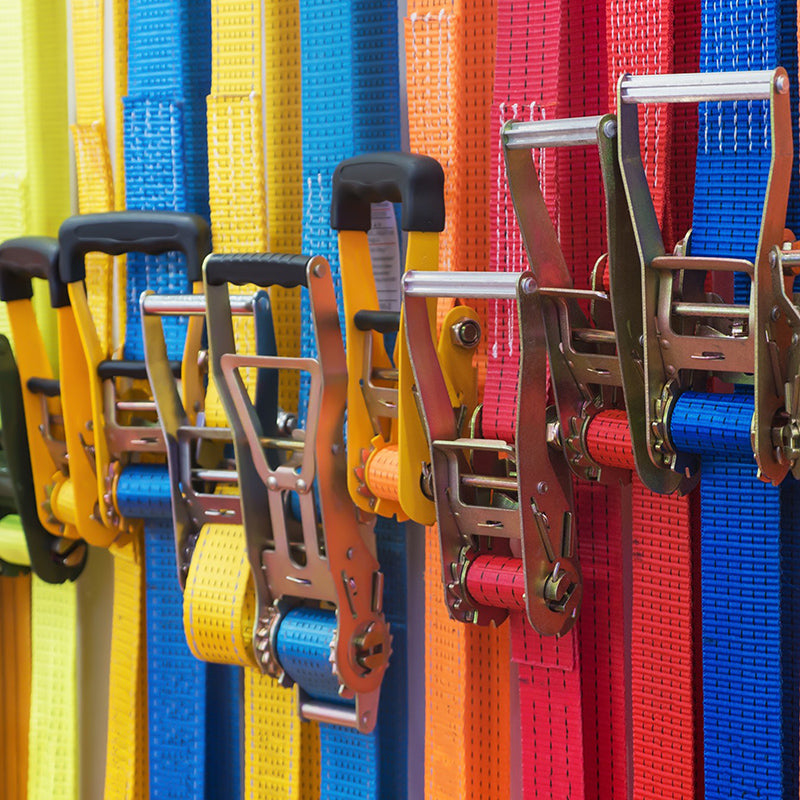
- Make sure the strap is flat and free of twists as you carefully pass it through the ratchet mechanism.
- To hold the load securely in place, pull the strap to release any looseness.
- To uniformly tighten the strap, use the ratchet handle. This step should not be skipped because loose straps will be unable to hold the load firmly.
If you're not sure how to fasten your straps properly, The Ratchet Shop provides professional advice and instructions along with their products. Moreover, their staff is dedicated to making sure all users understand how to properly use their straps, putting efficiency and safety first.
Not Inspecting the Straps for Damage
If you do not check ratchet straps properly before use, then this is another serious mistake. Most of the time straps have cuts, or they might be broken from one end which is what weakens them. Furthermore, using straps that are damaged might lessen their usefulness and raise the possibility that they will break while being used.
That is why you need to examine every strap carefully before using it. Check for any indications of wear, such as cuts, loose threads, or worn edges. Proper attention should be paid to the stitching because this is frequently where flaws first show up. Replace a strap right away if it shows any wear. However, your cargo and safety are in danger when you use a defective strap.
The Ratchet Shop recognises the value of reliability. Therefore, to ensure long-lasting performance, their trained experts use strong materials and strict quality controls when manufacturing their straps. Hence, purchasing their items gives you more peace of mind and lowers the frequency of replacements.
Overtightening the Strap
It is quite problematic if you tighten your ratchet straps too much. Because many people think that the load will be more securely fastened if the strap is tighter. But the fact is that overtightening, may eventually weaken the strap or damage the cargo.
Most importantly, the loads must be securely held by the straps without using too much force which could lead to stress or distortion. When handling fragile objects, always make sure you protect them from harm by securing the load. In addition, during transportation, check your goods frequently to make sure the straps are still secure without applying undue pressure.
You can get the ideal tension with a range of straps from The Ratchet Shop that have adjustable mechanisms. So, you can safely secure your cargo by Avoiding ratchet strap failures.
Not Securing Loose Ends
If ratchet straps are left untied, or there are loose ends on a strap then it might lead to serious issues. Because excess strap material may flap in the wind while being transported, making noise, causing damage, or even becoming dangerous if it gets stuck in moving parts. Additionally, this mistake may cause the strap to come loose and risk the cargo's security.
Therefore, always tie or tuck away loose ends after securing your cargo to avoid this. To prevent the extra material from slipping, tuck it into a safe place or tie a simple knot. Additionally, by minimising unnecessary damage, proper strap management extends their longevity. You can find solutions that make tying up loose ends simpler with The Ratchet Shop's extensive product line. Their dedication to excellence guarantees the safety of your cargo, from beginning to end.
The Ratchet Shop always guarantees their client satisfaction. Along with comprehensive instructions to guarantee proper usage, they offer a large collection of ratchet straps designed to meet various purposes. Furthermore, professionals and regular users can easily choose their straps because they are made to survive harsh environments. So, basically, you are investing in ease of use, reliability, and safety when you select their products.
What questions do clients frequently ask about The Ratchet Shop?
What happens if I use the wrong size or capacity of the ratchet strap?
Using a strap with the incorrect working load limit (WLL) or size can lead to the strap failing under pressure. This can result in cargo damage, accidents, or harm to people nearby. Always ensure the strap's WLL matches the weight of your load.
How can I properly secure a ratchet strap to prevent it from loosening?
To secure a ratchet strap, thread it correctly through the ratchet mechanism, pull it to remove slack, and tighten it evenly using the handle. Make sure the strap lies flat without twists and is snug enough to hold the load firmly without causing damage.
Why is it important to inspect ratchet straps regularly?
Inspections help identify frays, cuts, or other wear that compromise a strap’s strength and reliability. Damaged straps are more likely to fail during use, posing risks to safety. Replace worn-out straps immediately to ensure secure transport.
Can overtightening a ratchet strap cause damage?
Yes, overtightening can damage both the cargo and the strap itself. It’s essential to strike a balance—tight enough to secure the load, but not so tight that it causes stress or deformation to the items or the strap.
How can I manage loose ends of ratchet straps during transport?
Secure loose ends by tying them in a knot or tucking them away securely. This prevents flapping, reduces wear and tear, and avoids the risk of straps getting caught in moving parts or coming undone during transportation.
Conclusion
Nowadays it is quite important to properly use ratchet straps for cargo transportation that is both safe and effective. But mistakes like selecting the incorrect strap, fastening it incorrectly, or neglecting to check for corrosion might have bad effects.
That is why you need to always follow certain steps, such as balancing the strap's capacity with your load and routinely examining straps, to prevent these problems. In order to keep your cargo safe, pay attention to things like tying off loose ends and not tightening too much. So, you can choose The Ratchet Shop which provides the best products for each task with a next-day delivery option.


