


Contents2 sections
Both lifting chains and load restraint chains differ from each other on the basis of their utilisation, construction, and safety.
Every equipment has its specifications that the user requires to understand before using it. In most cases, a worker encounters unseen consequences because of inappropriate usage of equipment or didn’t consider reading its characteristics properly.
In the comparison of load restraint chain vs lifting chain, a wrong selection of gear can lead to unimaginable loss. Through this blog, you will be learning about what makes these similarly named chains distinct from each other.
Lifting Chains VS Lashing Chains
Style Of Lifting
Lifting chains are widely used for overhead lifting or vertical lifting. This is a kind of lifting in which an object floats in the air through the proper connection of a chain with a lifting device like a crane.
But the lifted item must be placed in the centre, and remember to do the proper inspection of a lifting chain before proceeding with work. Because in overhead lifting, a sudden fall might become the result of dangerous outcomes.
On the other hand, load restraint chains are made to restrain or hold the cargo during transportation. It cannot be used in lifting as its nature of performance is for heavy equipment tie down, towing, and logging.
Mismatched Usage in Industries
Lifting chains can easily work in rough and tough conditions because they are resistant to cuts and abrasion. Therefore, this equipment is used in construction sites, shipyards, and factories to lift unusual, shaped loads.
Transport chains are used to secure bulk materials, such as those used in manufacturing and automotive applications, on trucks or trailers. Thus, these chains play an important role in global trade.
Distinctive Construction
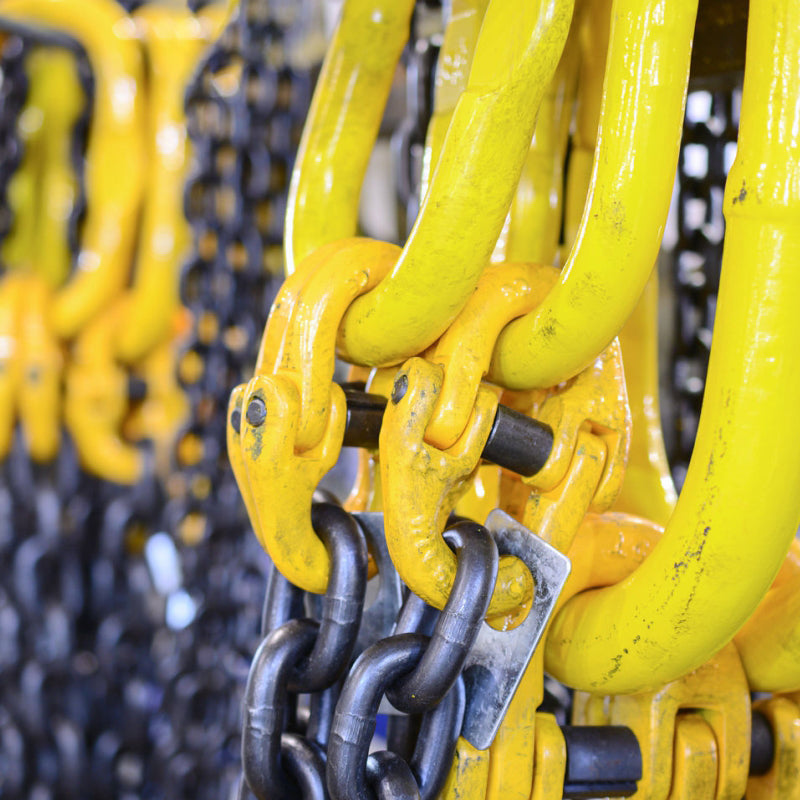
The lifting chains, which are easily available at The Ratchet Shop, are made from Grade 80 alloy steel. This component has higher corrosion resistance, which indicates its strength and safety for lifting heavy weights.
Moreover, during construction, the alloy steel chain undergoes advanced heat treatment, which highlights that it can easily bear weight and can work in extreme temperatures.
If you look at the tie-down chains, then carbon steel with Grade 43 or Grade 70 is used in their creation. This is not as strong as alloy steel and is considered to be utilised for general purposes. Hence, the main reason behind the inability is that carbon steel only has iron and carbon in it, which can usually be found in every structure and even in cars as well.
Degree Of Risk
Safety is the sole non-negotiable part in construction, maritime, and agriculture settings. Therefore, it is highly dependent upon what type of equipment you are relying on for your work.
In the case of lifting chains, before breaking, they elongate in an unusual way, which gives a warning to workers.
But load restraint chains are not safe because there is no indication before breakage, and they suddenly snap, and your load might fall out of the trailer, which is quite dangerous.
Hence, in the comparison of lifting chains vs lashing chains, it is crucial to select appropriate equipment for your work.
Did You Know?
Lifting chains at The Ratchet Shop are proof load tested to 2.5 x WLL (Working Load Limit). However, this means your safety when using this equipment has been guaranteed.
You can customise your grade 80 lifting chain, whether it is single leg, two leg, three leg, or four leg.
Lastly, there is a major advantage if you reside in England, Scotland, and Wales because your lifting chains will be delivered the next day, for those who placed an order before 12:00 pm.
What are the questions that people have for The Ratchet Shop?
Can I use a load restraint chain for lifting?
No. Load restraint chains are not designed for overhead or vertical lifting. They are made for securing and restraining cargo during transport. Using them for lifting can lead to sudden chain failure and serious safety hazards.
What makes lifting chains safer for lifting operations?
Lifting chains are built with high-strength Grade 80 alloy steel and undergo heat treatment for durability in extreme conditions. They also elongate before breaking, giving operators a visible warning sign that a key safety feature is not found in load restraint chains.
Where are lifting chains and load restraint chains commonly used?
- Lifting chains: Construction sites, shipyards, and factories use lifting chains for unusually shaped or heavy loads.
- Load restraint chains: The Transport industry that secures heavy equipment, vehicles, logs, and industrial cargo on trucks or trailers.
Why are the material grades different between the two chains?
Lifting chains use Grade 80 alloy steel due to its greater strength and corrosion resistance, making it suitable for lifting heavy loads.
Load restraint chains are often Grade 43 or Grade 70 carbon steel, strong enough for tie-down tasks but not engineered for lifting loads off the ground.
What are the risks of using the wrong type of chain?
Using the wrong chain can lead to:
- Sudden breakage
- Dropped loads
- Serious injury or property damage
A gear mismatch, such as using a load restraint chain for lifting, is one of the most common causes of workplace accidents involving chains.
Conclusion
In the comparison of lifting chains vs lashing chains, the ending word “chain” might make people think that they are similar, but they are developed for fundamentally different reasons. Lifting chains are developed for safe overhead lifting, delivering great strength, longevity, and obvious warning indicators before failure.
In contrast, load restraint chains are designed to secure cargo in place during transit and should never be used for lifting. However, to safeguard employees, machinery, and the load itself, the right chain must be selected. You can guarantee safer and more effective operations in any industry by being aware of its unique functions and requirements. So, reach out to The Ratchet Shop and get proof-tested equipment.


