



Contents8 sections
Choosing a ratchet strap starts with understanding the load and how it will be secured, not simply picking the biggest number on a product page. This guide explains what to compare before you buy, so you can narrow down the options and ask the right questions.
This is a buying guide, not a load-securing calculation or training course. Follow the strap manufacturer's instructions and obtain competent advice for your particular load and vehicle. Ratchet lashing straps must never be used for lifting.
Start with the load and vehicle
Before comparing products, note the load's weight, dimensions and shape, the vehicle or trailer being used, and the available anchorage points. Consider how the load will be positioned and whether it will be directly restrained or secured using straps over the top. These details matter when selecting suitable equipment and determining the number of straps required.
Do not assume that a strap advertised with a particular breaking strength can secure a load of the same weight on its own.
Understand LC and STF on the label
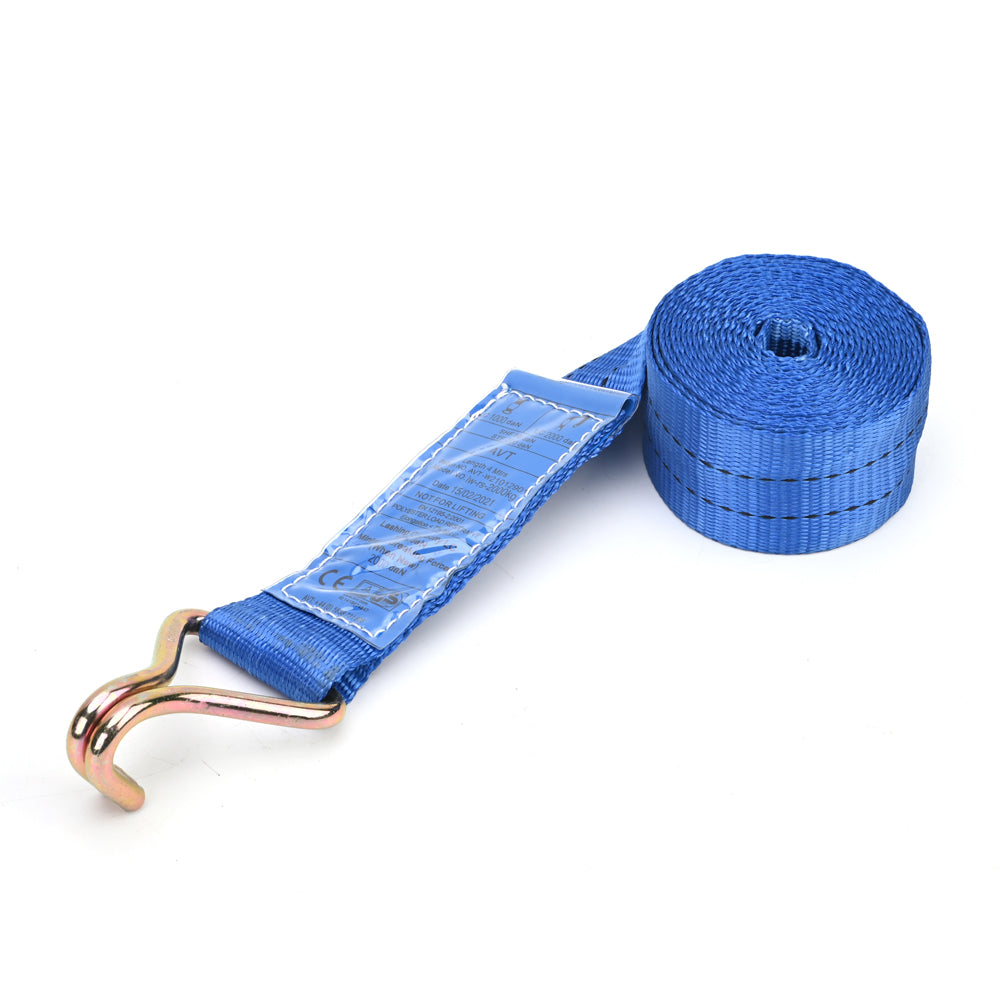
Two important label values are lashing capacity (LC) and standard tension force (STF). They describe different things and should not be treated as interchangeable.
- Lashing capacity (LC): the maximum force the lashing can withstand in straight-line use within its rating. Government guidance uses LC when calculating direct lashings.
- Standard tension force (STF): the tension produced in the strap when the ratchet is operated under its specified conditions. Government guidance uses STF when calculating frictional, or tie-down, lashings.
The label states these values in decaNewtons (daN). Breaking strength is a different figure. For frictional lashings, the required number also depends on factors such as friction, strap angles and whether the load is blocked against movement. A headline capacity alone is not enough to select a complete securing arrangement.
Compare length and fittings
Check the strap's stated length against the route it needs to follow between suitable attachment points. Read the product details carefully so you understand whether the quoted measurement is the complete assembly length or a component length.
Compare the end fittings with the intended anchorage points and check the manufacturer's compatibility information. The strap assembly and attachment points need to be suitable for the intended use; the securing arrangement is only as strong as its weakest component.
Do not choose by width alone
Webbing width is useful when comparing products, but it is not a substitute for the labelled LC and STF values. Compare the full specification, including fittings, length and manufacturer instructions, rather than assuming two straps of the same width perform identically.
Check condition before use
Inspection remains important after purchase. Check the webbing, ratchet, fittings and label in accordance with the manufacturer's instructions. Do not use unidentified equipment with missing or illegible labels, or equipment that fails the manufacturer's inspection criteria. Keep the instructions and rating information available to the people using it.
Your pre-purchase checklist
- Record the load's weight, dimensions and shape.
- Identify the vehicle and suitable attachment points.
- Establish the securing method with a competent person.
- Check the labelled LC and STF, not just breaking strength.
- Confirm the assembly length and compatible end fittings.
- Read the manufacturer's use and inspection instructions.
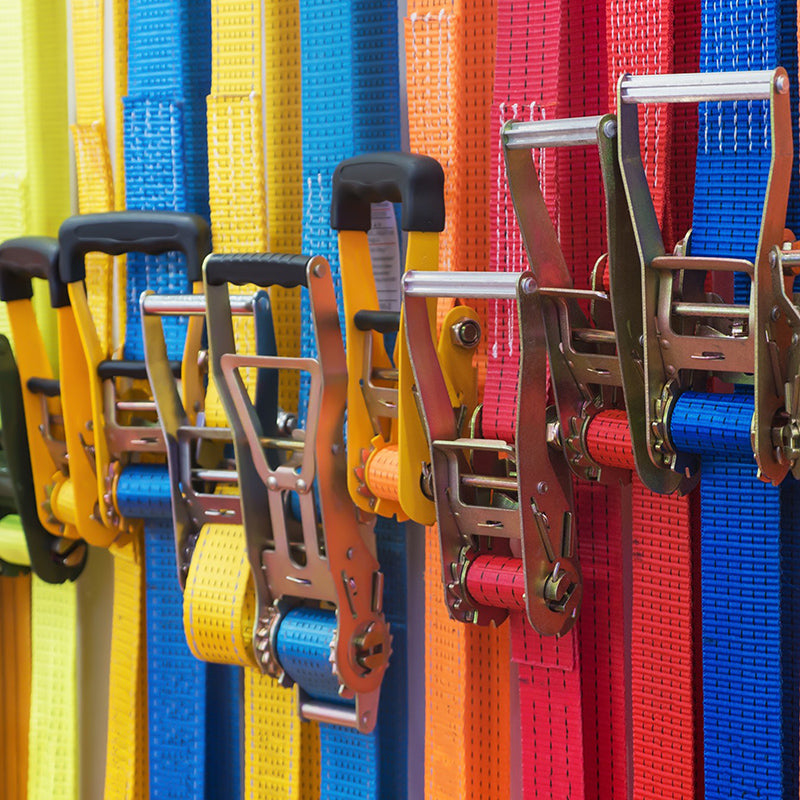
Browse ratchet straps
Explore our ratchet strap range and compare the individual product specifications. If you need help narrowing down the range, have your load, vehicle, length and fitting requirements ready when you contact us.
Further reading
For detailed load-securing guidance, read the government guide to ways to secure loads in goods vehicles. For manufacturer guidance on handling and inspection, refer to SpanSet's lashing strap operating instructions, alongside the instructions supplied with your own equipment.


