


Contents7 sections
Securing a heavy load on a low loader, flatbed, or curtain sider always comes down to one piece of equipment holding the chain under tension: the load binder. Load binders are mechanical tensioning devices that pull chain lashings tight enough to stop cargo shifting during transport, and fitting the wrong type or size is one of the fastest ways to fail a DVSA roadside check. This guide covers the main types of load binder, how to match capacity to your load, the UK standards that apply, where each design is used on the road, and how to keep binders safe for years of daily use.
What Is a Load Binder and How Does It Work?
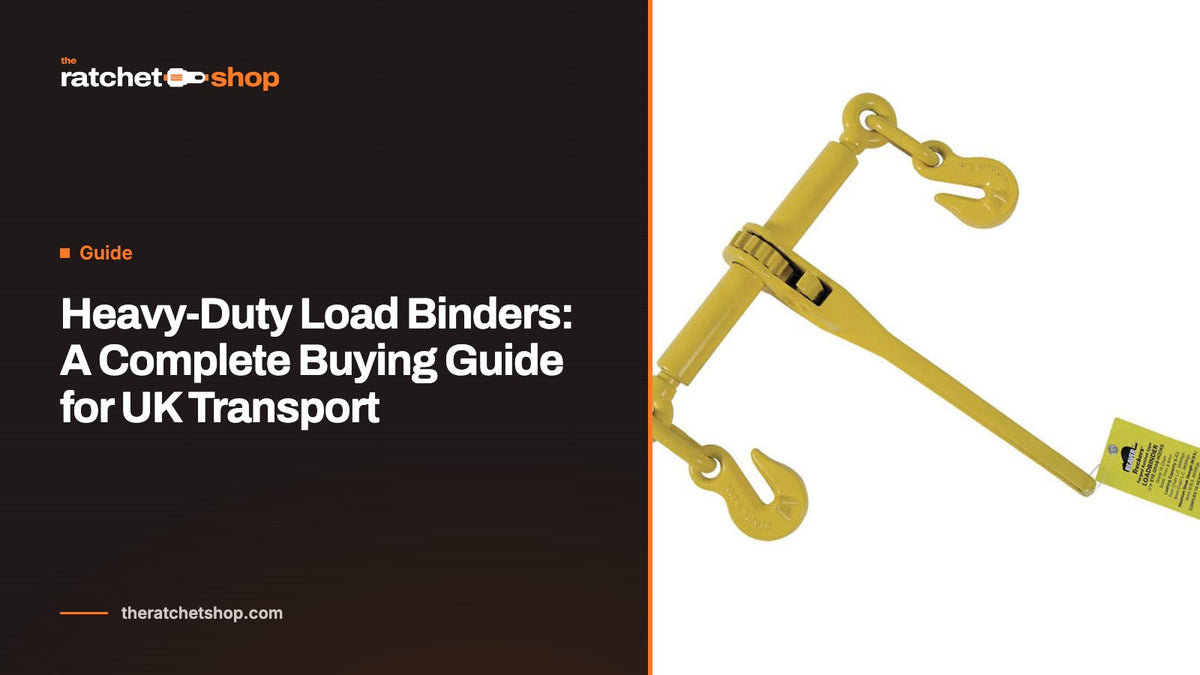
A load binder is a lever operated or ratchet operated tool that shortens a length of chain and locks it under tension. Both designs sit inline on a chain lashing, between two hooks, and convert hand force into several tonnes of pulling power through mechanical leverage. Once the chain is tensioned, the binder handle locks into position so the chain cannot slacken under braking, cornering, or vibration.
Two designs dominate the UK market for heavy duty transport work, and choosing between them is largely a question of control versus speed.
Ratchet Load Binders
A ratchet load binder tightens the chain in small, controlled increments using a ratcheting handle. Because tension builds gradually, this type of binder is easier and safer to operate single handed, and it is far less likely to release suddenly if the handle is knocked during loading. A ratchet binder is the standard choice for drivers who load and unload several times a day and need consistent, repeatable tension every time.
Lever Load Binders
Lever load binders tension the chain in one motion by snapping a long handle over centre. They apply tension faster than a ratchet binder and can generate very high pulling force with less effort, but that same speed makes them harder to control and more likely to whip back if released incorrectly. Lever binders suit experienced operators securing very heavy, static loads such as plant and machinery, where speed of application matters more than fine tension control.
Ratchet Binder or Lever Binder: Which Should You Choose?
The right choice depends on the load, the driver, and how often the vehicle is loaded.
|
Factor |
Ratchet Load Binder |
Lever Load Binder |
|
Tensioning method |
Ratcheting handle, gradual |
Over centre lever, instant |
|
Control |
High, adjustable in small steps |
Lower, harder to fine tune |
|
Speed of use |
Slower to tension |
Faster to tension |
|
Best suited to |
Frequent loading and unloading, mixed cargo |
Heavy static loads, experienced operators |
|
Handling risk |
Lower recoil risk |
Higher recoil risk if mishandled |
For most general haulage and plant transport work, a ratchet binder offers the better balance of safety and control. Lever binders remain popular with experienced low loader operators who move the same heavy plant loads daily and prioritise speed.
What Capacity or Working Load Limit Do You Need?
Direct answer: the binder and the chain must be matched to the same working load limit, and the combined lashing force fitted to a load must reflect the load securing force calculated for that specific cargo.
The lashing force required for any load is worked out according to BS EN 12195-1, which takes into account the weight of the load, the friction coefficient of the load bed, and the direction of travel. Once that figure is known, the chain and binder can be selected to match it, and load securing planning becomes far more precise than guessing at the number of chains to fit.
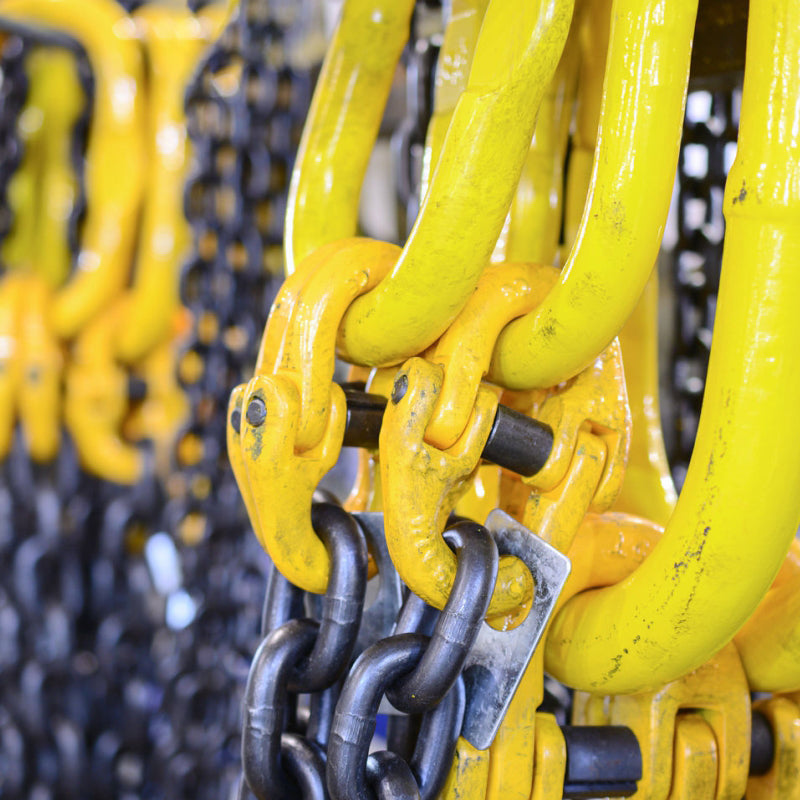
Heavy-duty binders are almost always paired with grade 8 lashing chain, sized to match the device's own rated pulling force. Low Loader chains are supplied in graded diameters, each with a fixed lashing capacity. The 8mm (8,000kg) Lowloader Chain suits general plant and smaller machinery, the 10mm (12,000kg) Lowloader Chain covers mid weight equipment such as diggers and telehandlers, the 13mm (21,000kg) Lowloader Chain is specified for heavier plant and structural steel, and the 16mm (32,000kg) Lowloader Chain is reserved for the heaviest abnormal loads. Fitting an undersized binder to an oversized chain wastes the chain's rated capacity, so binder and chain should always be bought and used as a matched pair.
What UK Compliance Standards Apply to Load Binders?
UK compliance for load securing equipment rests on three layers, and all three are checked at the roadside.
First, BS EN 12195-3 is the technical standard covering lashing chains and their tensioning devices. It requires the chain itself to conform to EN 818-2 and the connecting components, such as hooks and shortening grabs, to conform to the EN 1677 series, with a safety latch fitted to any connecting or shortening component. Second, BS EN 12195-1 sets out how the actual lashing force for a given load is calculated, so the number and rating of binders used is never left to guesswork. Third, the DVSA's Securing Loads on HGVs and Goods Vehicles guidance, most recently updated in December 2024, sets the operational standard that DVSA examiners check during roadside inspections, alongside the legal duty in Section 40A of the Road Traffic Act 1988 and Regulation 100 of the Road Vehicles (Construction and Use) Regulations 1986, which prohibits using a vehicle whose load is secured in a way that endangers other road users.
Buying certified, traceable load binders and chain, marked with their Lashing Capacity and Standard Tension Force, is the simplest way to satisfy all three layers and clear a DVSA inspection without delay. The December 2024 update to DVSA guidance also clarified that operators and drivers should not combine ratchet straps and chains on the same load or lashing, since the two materials stretch differently under tension.
Where Are Heavy-Duty Load Binders Used?
Heavy-duty load binders are used wherever cargo is too heavy, sharp edged, or awkward for webbing straps alone. Typical applications include:
- Securing excavators, diggers, and telehandlers to low loader trailers
- Lashing structural steel, girders, and pipes that would cut through webbing over time
- Restraining timber packs and construction plant on flatbed trailers
- Chaining down recovery vehicles and vehicle transporters
- Holding scrap metal and agricultural machinery loads during haulage
Chains and binders are generally preferred over webbing straps for loads with sharp edges, high mass, or a shape that could abrade or cut synthetic webbing, since chain resists cutting and crushing far more effectively.
How Should You Maintain and Inspect Load Binders?
Binders should be inspected before every single use, not just during scheduled servicing. Check the handle and hook for cracks, bending, or weld damage, confirm the locking mechanism engages fully and holds under tension, and look along the accompanying chain for stretched or corroded links. Any binder that will not lock securely, or any chain link that has stretched beyond the manufacturer's tolerance, should be removed from service immediately rather than repaired in the field.
Keeping the pivot points lightly oiled prevents seizing in cold or wet weather, and storing binders off the trailer bed between loads reduces exposure to rain and road salt, both of which accelerate corrosion on the locking mechanism. A binder that has been dropped or overloaded should be proof tested before it returns to service, since internal damage is not always visible from the outside.
Frequently Asked Questions
Are ratchet load binders stronger than lever load binders?
Not inherently. Strength depends on the chain and binder's rated working load limit rather than the tensioning mechanism. Lever binders apply tension faster, while ratchet binders offer safer, more controlled tightening.
Can I use a load binder with any size of chain?
No. A load binder must be matched to the diameter and grade of chain it is rated for. An undersized binder will not reach full tension, and an oversized one can overload the chain.
Do load binders need to be certified for UK road use?
Yes. Load binders and their chains should conform to BS EN 12195-3 and carry Lashing Capacity markings, since this is what DVSA examiners check at the roadside.
How often should load binders be inspected?
Before every use, in addition to scheduled maintenance. Cracks, bent handles, and stretched chain links are the main signs a binder needs replacing.
Can chains and ratchet straps be used together on the same load?
No. Current DVSA guidance states that operators should not combine ratchet straps and chains on the same load or lashing, since the two materials stretch differently under tension.
Conclusion
Choosing the right load binder comes down to four decisions: ratchet or lever, a chain grade and diameter matched to the binder's rated capacity, certification to BS EN 12195-3, and a maintenance routine that catches wear before it becomes a roadside prohibition. Get those four right and a load binder will hold heavy, awkward cargo securely for years, keep your vehicle compliant with DVSA guidance, and keep other road users safe. Browse The Ratchet Shop's full range of load binders and lowloader chains to find the binder and chain combination rated for your next load.


